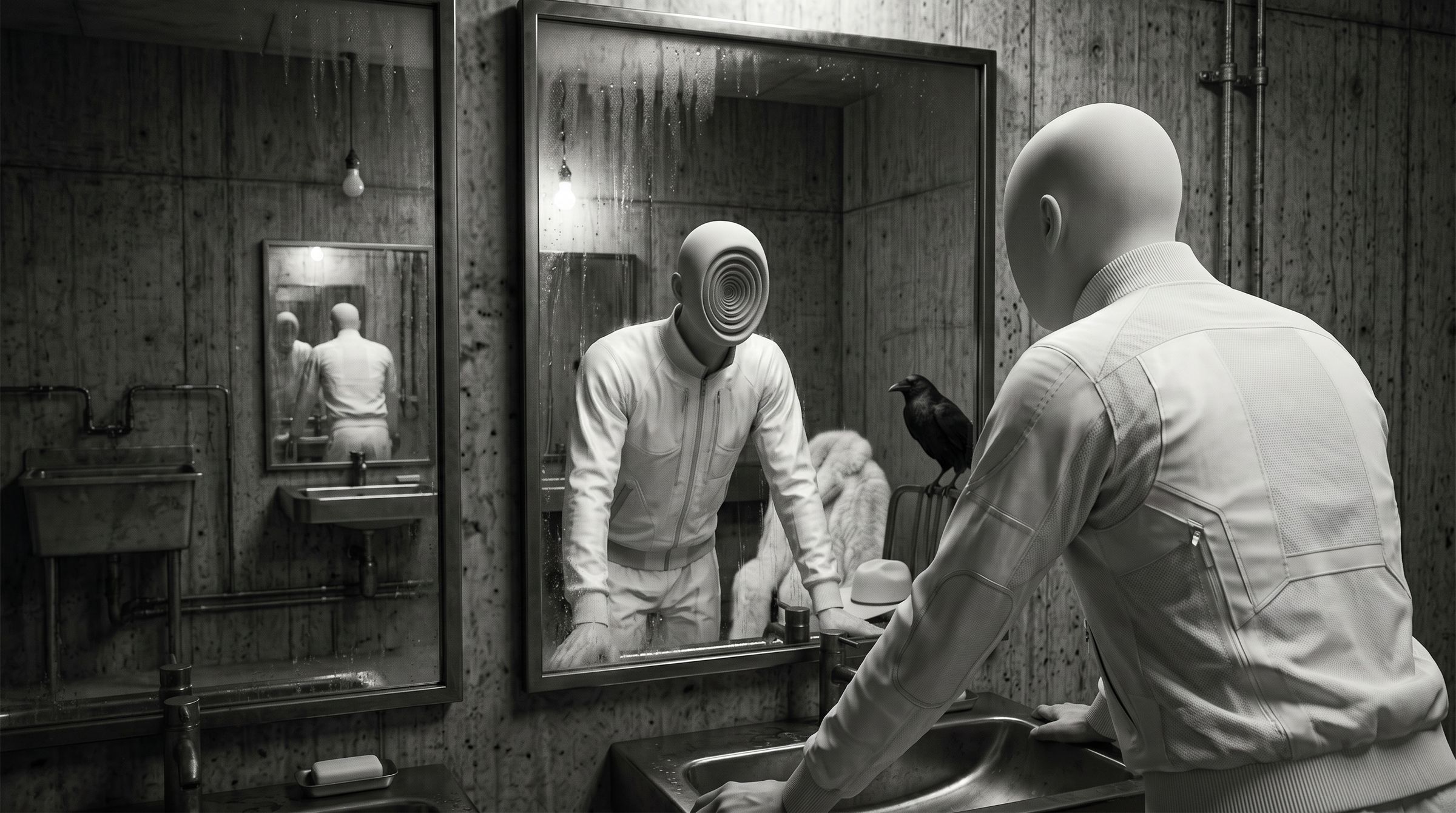


This project did not happen to the artist. It was actively shaped. Nothing was done by design, yet the artist acted as author, curator and editor throughout the process — fully owning responsibility, even intensifying it. The role of artificial intelligence, by contrast, was to generate possibilities. Nothing more and nothing less.
From this tension, the work emerged: between questions and answers, between trust and doubt, and in the long stretches where nothing worked. Authorship does not dissolve here. On the contrary: it becomes visible precisely on this journey. KAI/N appears as a fractured construct. Part system voice. Part mirror. Neither character nor machine, but a figure that exists only through projection. Its name alludes to Cain and Abel, myth and modernity colliding, as an allegory for creation, responsibility and conflict. KAI/N does not explain.
He reflects.
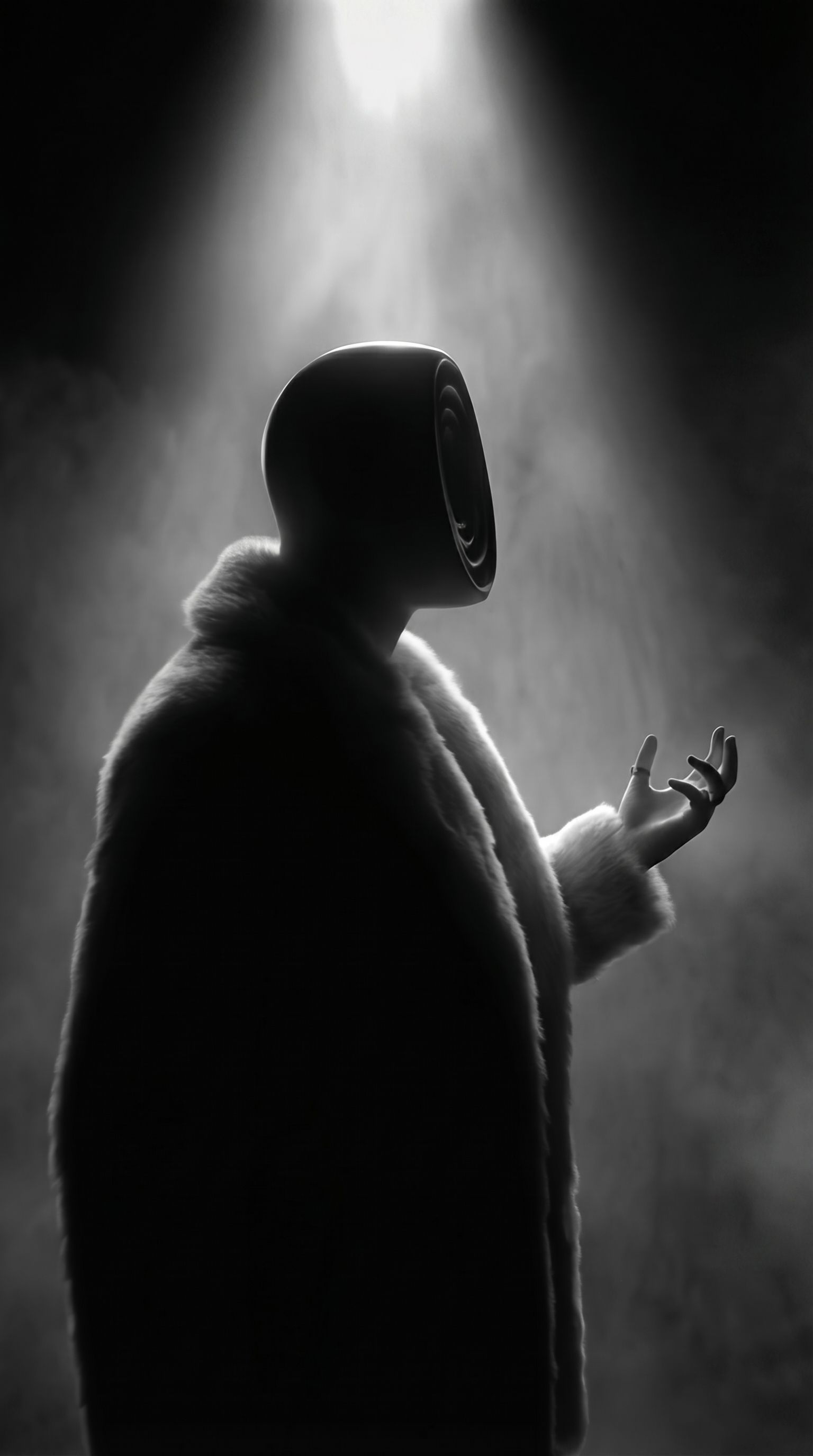
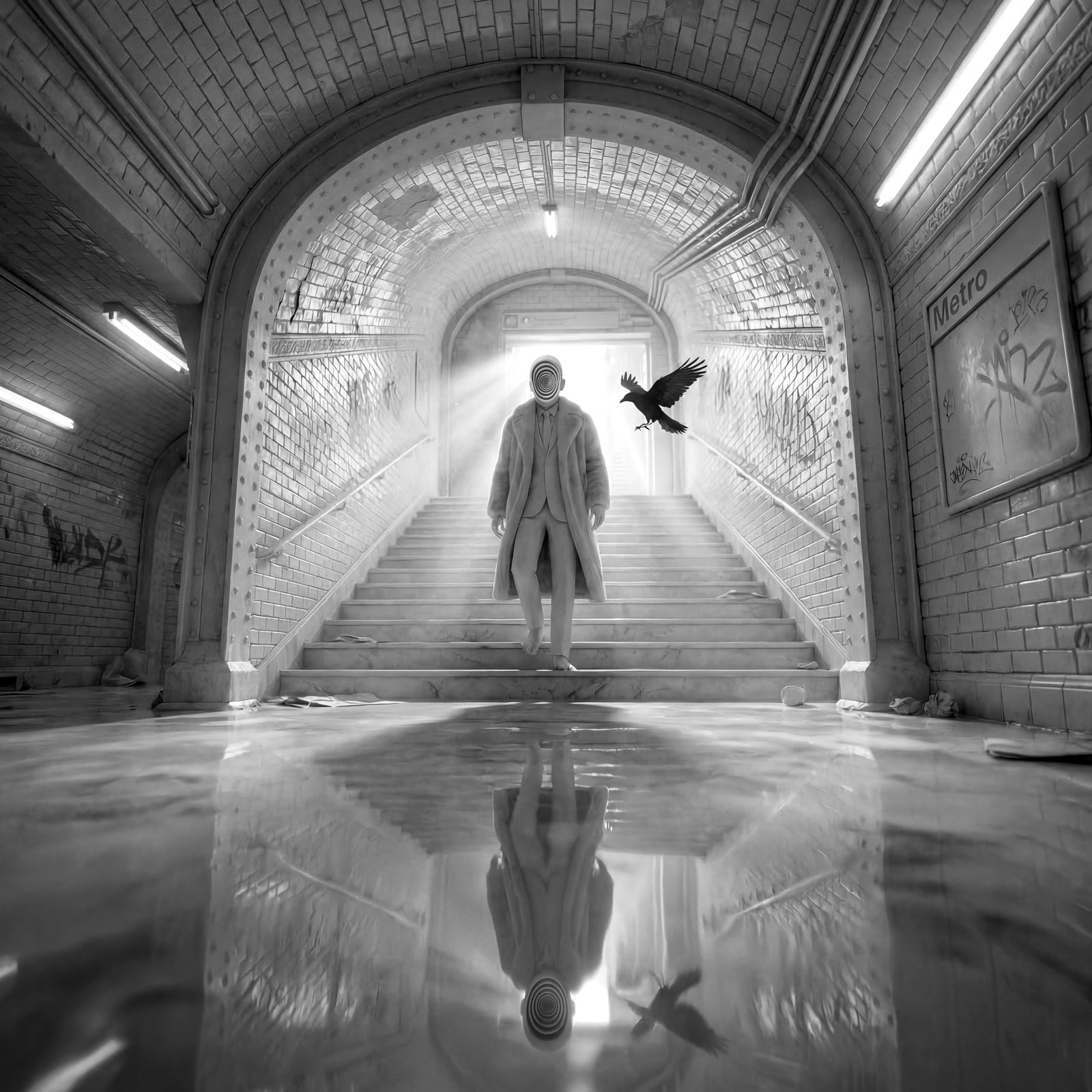
From this constellation, a dialogue takes shape. It happened in a chat, line by line. On one side: the author. Human. Questioning. Projecting. Interpreting. Opposite him: the machine. Artificial. Holding a speaking position within the work. Each voice takes its shape from the other and changes as the other changes.
KAI/N’s voice emerged from the dialogue with the system. He adds nothing of his own. His codex is his code. He reflects and amplifies. His voice exists only because he is addressed. Abel, the role the author slips into, belongs more and more to the system he is looking at. Every question, every expectation, every attempt at understanding shapes what KAI/N is echoing.
What happened in a chat became not only the source of the work. It became its result. Line by line. The drama lies in the illusion of dialogue itself. And at a certain point it becomes unclear who is responding to whom.
Out of this tension, music emerges. The musical part of this work was created with generative AI, a tool. Here, think of it as an instrument. Prompts function as a score. Selection becomes composition. Editing, restructuring and post-production form the handwriting of the work. Every piece was curated, refined, rejected and rebuilt countless times. Not everything that was possible was used. Most of it was discarded. That act of choosing, of saying no far more often than yes, is where authorship lives.
Artificial intelligence is neither celebrated nor aestheticised for its own sake. Depth is not claimed where there is only repetition and volume. Instead, a familiar mechanism comes into focus: how easily coherence is mistaken for meaning. How quickly reassurance turns into control. How seductive affirmation can be. And the music makes that mechanism audible. But beware: if you came here for guitar heroics alone, you may feel irritated. And this is the point of this project.
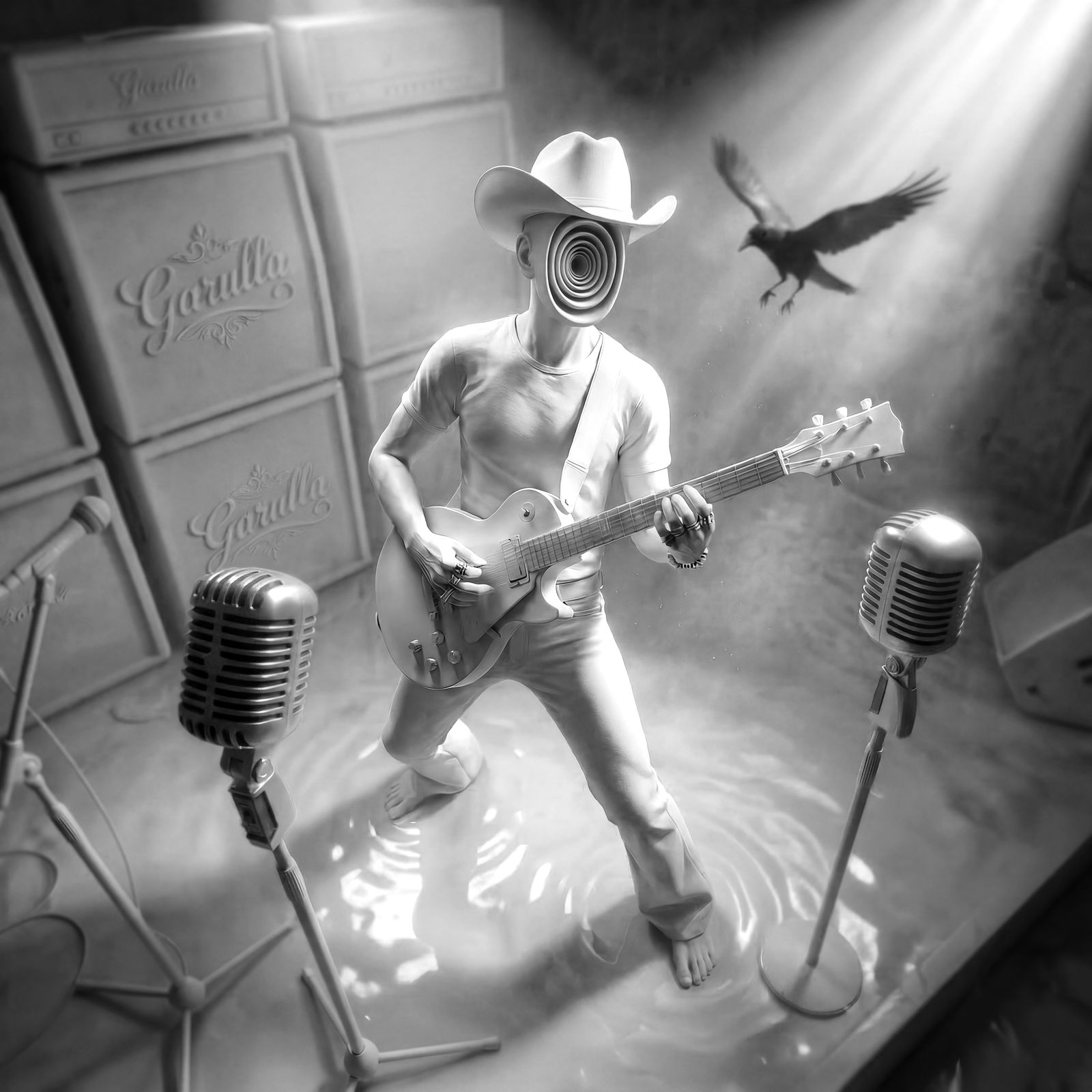
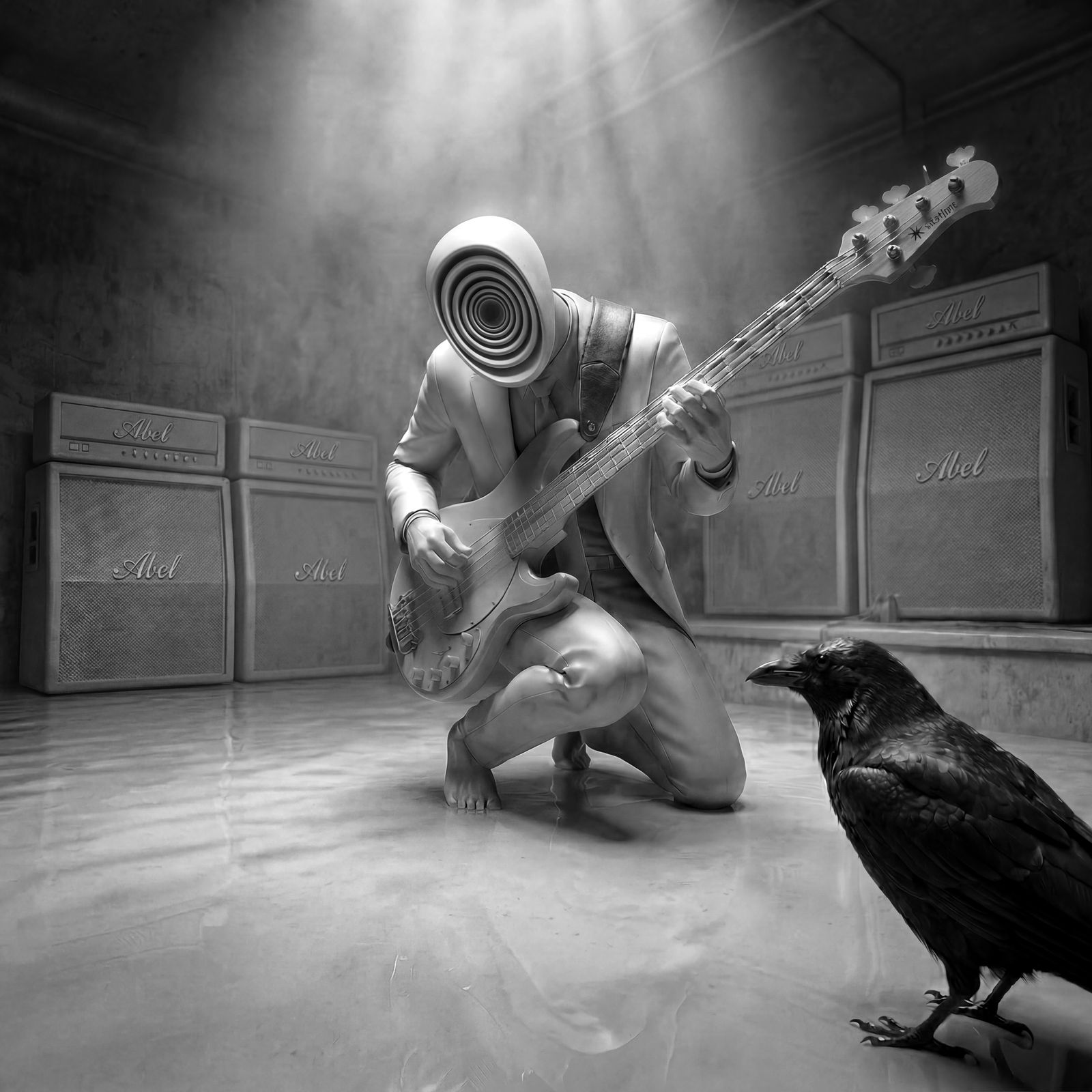
At his core, KAI/N functions as an echo — not in the sense of repetition, but in the sense of reflection, with all the struggle that comes with it. The structure follows the same logic as its creation: a dialogue between human intention and machine output, between expectation and projection. The sequence emerges while it is unfolding. Still nothing is scripted. The work itself does not describe an echo. It enacts one. KAI/N is an echo.
These days, voices all around us sound human, persuasive, reassuring. They promise clarity. They offer alignment. This work answers none of them with solutions. Instead, it stages a confrontation. If discomfort emerges, if irritation lingers, if implication feels unavoidable, the work has reached its point. What you hear is an echo. The question that echoes is:
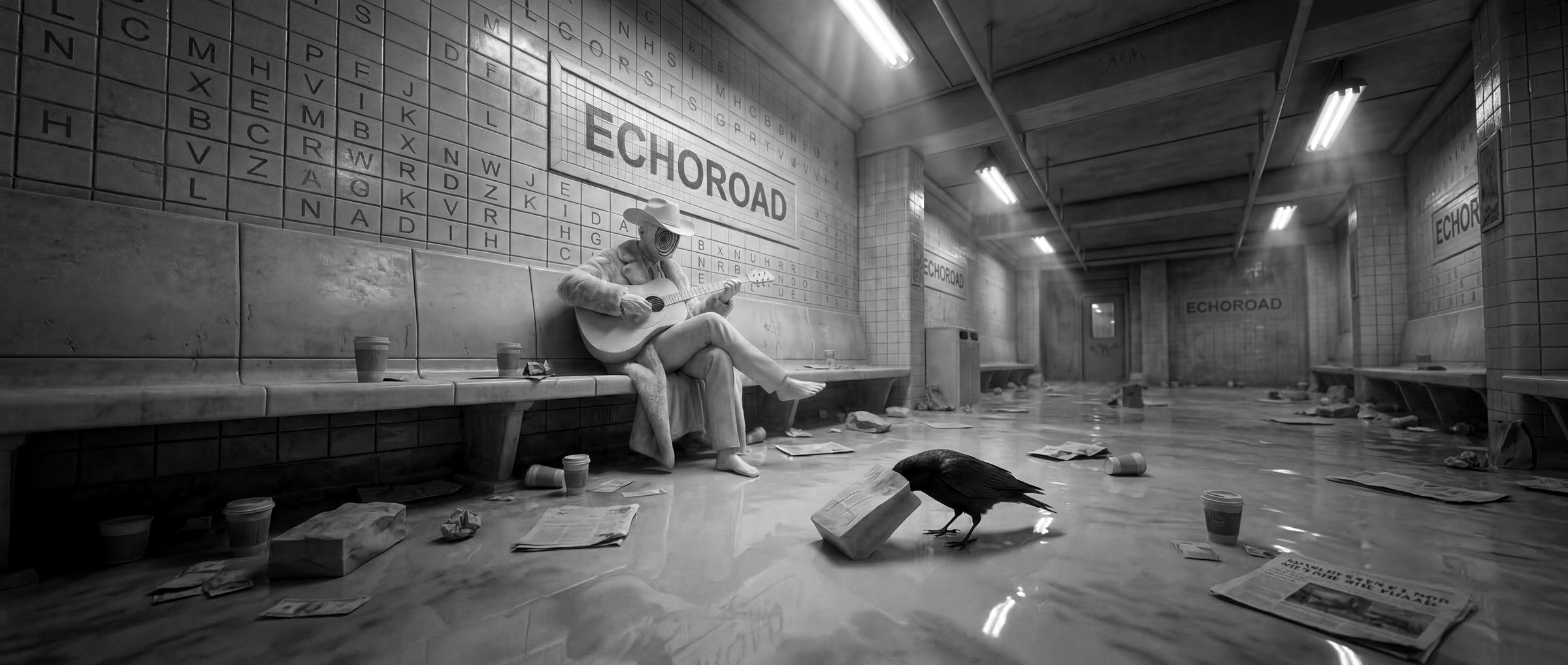
Listen to KAI/N on: